Guide
Electrolysis for PCOS Facial Hair: Sessions, Results & Tips
Electrolysis is the only permanent removal for PCOS chin and lip hair: sessions needed, electrolysis vs laser, pain, aftercare, and finding a pro.
By PCOS Polly ·
Key takeaways
- Electrolysis destroys each treated follicle, so it is the only method the FDA allows to be called permanent hair removal, and it works on every hair color and skin tone.
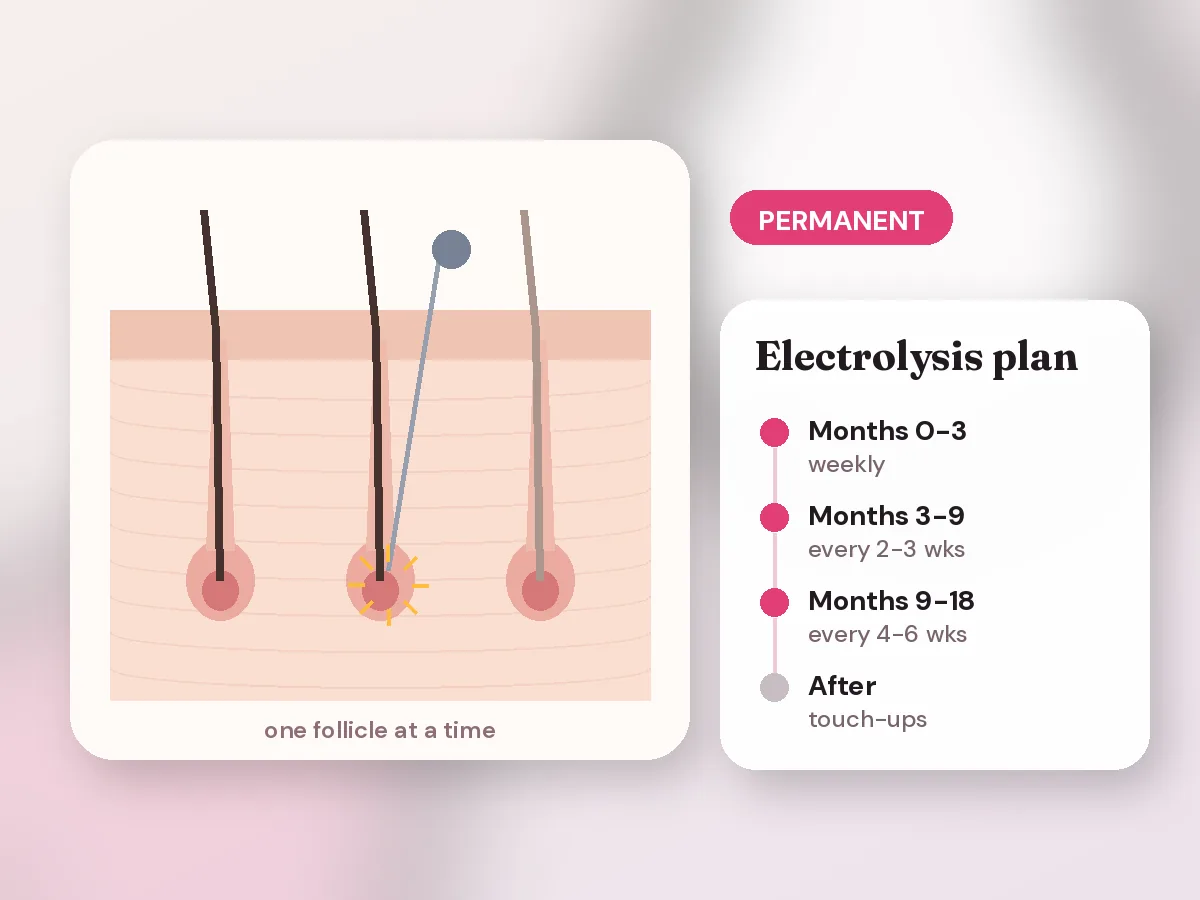
- For a PCOS chin and upper lip, expect weekly or fortnightly sessions at first and roughly 12-18 months of treatment, then occasional touch-ups for new hairs.
- Many people do laser first to thin dark hair, then electrolysis for what is left, including blonde, gray, and laser-resistant hairs.
- Hormones keep recruiting new hairs, so electrolysis works best alongside an androgen-lowering treatment such as the pill, spironolactone, or eflornithine cream.
- The electrologist matters more than the machine: look for a licensed or certified electrologist with experience in hormonal hair.
Electrolysis is the only permanent way to remove PCOS facial hair. A fine probe goes into each follicle and destroys it with heat or a chemical reaction, so a treated hair does not grow back, whatever its color. With PCOS the catch is time: androgens keep waking up new follicles, so a chin and upper lip usually take 12-18 months of weekly or fortnightly sessions, then occasional touch-ups. It works best after or alongside laser and with a treatment that lowers androgen activity.
Electrolysis is one of the options in our PCOS facial hair removal guide. This page goes deep on what to expect.
Electrolysis vs laser vs creams for PCOS
| Electrolysis | Laser | Eflornithine cream | Shaving, threading, waxing | |
|---|---|---|---|---|
| How it works | Destroys each follicle with a probe | Light heats pigment in many follicles at once | Slows hair growth while you use it | Removes hair at or below the surface |
| Permanent? | Yes, for each treated follicle | Long-term reduction; touch-ups needed | No; hair returns within weeks of stopping | No |
| Hair colors | All, including blonde, gray, red | Dark hair only | All | All |
| Skin tones | All | Depends on device (Nd:YAG for darker skin) | All | All |
| Typical course with PCOS | Weekly or fortnightly, 12-18 months, then touch-ups | 8-12 sessions 4-8 weeks apart, then maintenance (laser guide) | Twice daily; effects in 6-8 weeks | Ongoing |
| Main downside | Slow, can sting, needs a skilled provider | Rare paradoxical extra growth on the face | Prescription; only slows growth | Daily or weekly upkeep |
The FDA distinguishes the two: electrolysis may be marketed as permanent hair removal, while lasers may only claim permanent hair reduction.
Why PCOS hair needs a different plan
PCOS hair on the chin, jaw, upper lip, and neck is driven by androgens (male-type hormones that everyone has, at higher levels or with more sensitivity in PCOS). Two things follow:
- Any removal method only clears today’s follicles. Androgens can convert fine vellus hairs into coarse terminal hairs over months, so new ones keep appearing. That is why people with PCOS feel hair “comes back” faster.
- Laser has a weak spot on the PCOS face. Laser can occasionally trigger paradoxical hypertrichosis, finer new growth near treated areas, and it is reported more often on the face and neck and in people with hormonal hair. Electrolysis does not carry that risk, which is one reason so many people in r/PCOS say they switched.
The fix is to pair removal with something that slows new hair: the combined pill, spironolactone, or eflornithine cream, discussed with your clinician. These take around 6 months to show a difference in hair, so start them early. Our spironolactone guide covers what to expect.
How many sessions does electrolysis take with PCOS?
There is no single number, but this is a realistic pattern for a PCOS chin and upper lip:
| Phase | How often | Session length | What you notice |
|---|---|---|---|
| Months 0-3 | Weekly or every 2 weeks | 30-90 minutes | Lots of regrowth between visits; normal, because hairs grow in cycles |
| Months 3-9 | Every 2-3 weeks | 20-60 minutes | Hairs come back finer, lighter, and slower |
| Months 9-18 | Every 4-6 weeks | 15-45 minutes | Only scattered hairs; days between plucking or shaving stretch out |
| After the course | Every few months to once a year | 15 minutes | Touch-ups for new hormone-driven hairs |
Clinic estimates for PCOS often fall between 12 and 20+ sessions per area. A 2025 report from one electrology clinic followed 203 women with PCOS and facial hair, most of whom had tried laser first; full courses ran 12-18 months, and the clinic found electrolysis more reliable than laser for hormonal facial areas. It is a single-clinic study, so treat the numbers as a ballpark.
What people describe on r/PCOS matches: one woman went from weekly 90-minute sessions to one 45-minute session every 6 weeks after 18 months, with hair now so fine “no one notices it but me”. Others report most of the upper lip and chin hair gone after a few months of sessions every 3 weeks.
What a session is like
- Consultation. The electrologist looks at hair density, skin, and history, and does a short test patch. Ask which method they use: thermolysis (heat, fast), galvanic (chemical, slower but thorough), or blend (both).
- Grow it out. Most ask you to stop plucking or waxing for a few weeks so hairs are visible and in the growing phase. Short shaving is usually fine until a couple of days before.
- Treatment. A sterile, hair-fine probe slides into the follicle opening (not through the skin), a short pulse is applied, and the hair is lifted out with tweezers. It should slide out without pulling.
- Aftercare. Expect redness and small bumps for a few hours to a day. Keep the area clean, skip makeup and actives (retinoids, acids) for 24-48 hours, don’t pick, and use sunscreen.
Pain, side effects, and how to lower them
- Pain: a quick sting or heat per hair. The upper lip is the most sensitive. Ask about topical numbing cream, and some people find sessions easier when they’re not near their period.
- Common: redness, swelling, tiny pinpoint scabs for a few days.
- Less common: darker marks (post-inflammatory hyperpigmentation), especially on deeper skin tones; they usually fade over weeks. Good technique and sun protection reduce the risk.
- Rare: pitting or scarring, usually from too-high settings or overtreating an area. This is why the provider matters.
How to find a good electrologist
- Check credentials. Many US states license electrologists. Look for a CPE (Certified Professional Electrologist) credential or membership of a professional association.
- Ask about hormonal hair. Experience with PCOS (and with trans clients, who often have dense facial hair) is a good sign.
- Ask how they price. Most charge by time (often in 15-minute blocks) rather than by area, so session length and total months drive cost. Ask for a realistic plan for your face.
- Look for magnification and good lighting, sterile single-use probes, and a test patch before the first full session.
- Red flags: promises of results in a few sessions, hairs that “snap” when tweezed (the follicle was not treated), or lasting marks after every visit.
Laser first, then electrolysis?
For dark hair on light-to-medium skin, many people start with laser to knock down the bulk quickly, then switch to electrolysis to finish the hairs laser can’t catch: blonde, gray, fine, or stubborn ones. If your hair is light, gray, or red, or you have had paradoxical growth after laser, go straight to electrolysis. If you are deciding, our laser hair removal for PCOS guide covers sessions and device types.
Track your progress
Hair changes are slow, and it is easy to feel nothing is working in month three. Log each electrolysis session, any medication start date, and a weekly “days between removals” note in PCOS Polly, then look at the trend over months instead of trusting the magnifying mirror. Polly also tracks the cycle, sleep, and food patterns that move androgen symptoms. Try it free for 7 days.
Download PCOS Polly on the App Store →
Sources
- Comparison of permanent hair removal procedures before gender-affirming vaginoplasty. PMC, 2022 (FDA status: electrolysis as permanent hair removal, laser as permanent hair reduction).
- Teede HJ et al. 2023 International Evidence-based Guideline for the Assessment and Management of PCOS (hirsutism management).
- Clinical efficacy of electrolysis and laser hair removal in PCOS patients. The American Journal of Medical Sciences and Pharmaceutical Research, 2025.
- r/PCOS community threads: laser vs electrolysis and laser made it worse. Electrolysis? (2026).
- NHS. Polyendocrine metabolic ovarian syndrome (PMOS, previously PCOS).
Frequently asked questions
Does electrolysis work for PCOS facial hair? +
Yes. Electrolysis permanently destroys each follicle it treats, regardless of hormones or hair color. With PCOS, new follicles can still be activated by androgens, so most people need a course of 12-18 months and occasional touch-ups, ideally alongside a treatment that lowers androgen activity.
How many electrolysis sessions do you need for PCOS chin hair? +
It depends on density and how long the hair has been growing. Many electrologists quote 12-20 or more sessions per area for PCOS, starting weekly or every 2 weeks and spacing out as the hair thins. A dense chin often takes 12-18 months, and sessions get shorter over time.
Is electrolysis or laser better for PCOS? +
Laser is faster and treats many follicles at once, which suits dark hair on lighter skin. Electrolysis is slower but permanent and works on blonde, gray, red, and fine hairs, and it avoids the small risk of laser-triggered extra growth on the face. Many people with PCOS combine them: laser for bulk reduction, electrolysis to finish.
Does electrolysis hurt? +
Most people describe a quick sting or heat with each hair. The upper lip is usually the most sensitive area. Ask about numbing cream, avoid sessions right before your period if you are more sensitive then, and tell your electrologist if a setting feels too strong.
Can you do electrolysis at home for PCOS hair? +
Home electrolysis devices exist, but they treat one hair at a time without magnification or professional training, so results are inconsistent and the risk of marks is higher. For a PCOS chin or lip, a trained electrologist is far more effective.
Keep reading
All articles →-
 Guide
Laser Hair Removal for PCOS: Does It Work? Sessions & Tips
Laser works for PCOS hair, but expect more sessions and touch-ups. What studies show, sessions needed, cost, side effects, and tips for better results.
Read article -
 Guide
PCOS Facial Hair Removal: Best Methods Ranked (Chin & Lip)
PCOS hair removal methods ranked: laser, electrolysis, eflornithine, and at-home options for chin and lip hair, plus the hormonal layer that stops regrowth.
Read article -
 Guide
Getting Pregnant With PCOS: Timing, Odds & When to Get Help
Many people with PCOS conceive. How to time sex around real fertility signs with irregular cycles, lifestyle and medical options, and when to get help.
Read article