Guide
PMOS Symptoms: Full Checklist (Formerly PCOS Symptoms)
PMOS symptoms by body system: cycle, androgen, metabolic, mental health, and long-term risks, plus symptoms by life stage, what to test, and a self-check.
By PCOS Polly ·
Key takeaways
- PMOS (polyendocrine metabolic ovarian syndrome) is the new name for PCOS, so PMOS symptoms are the same as PCOS symptoms; the new name just puts the hormone and metabolic signs up front.
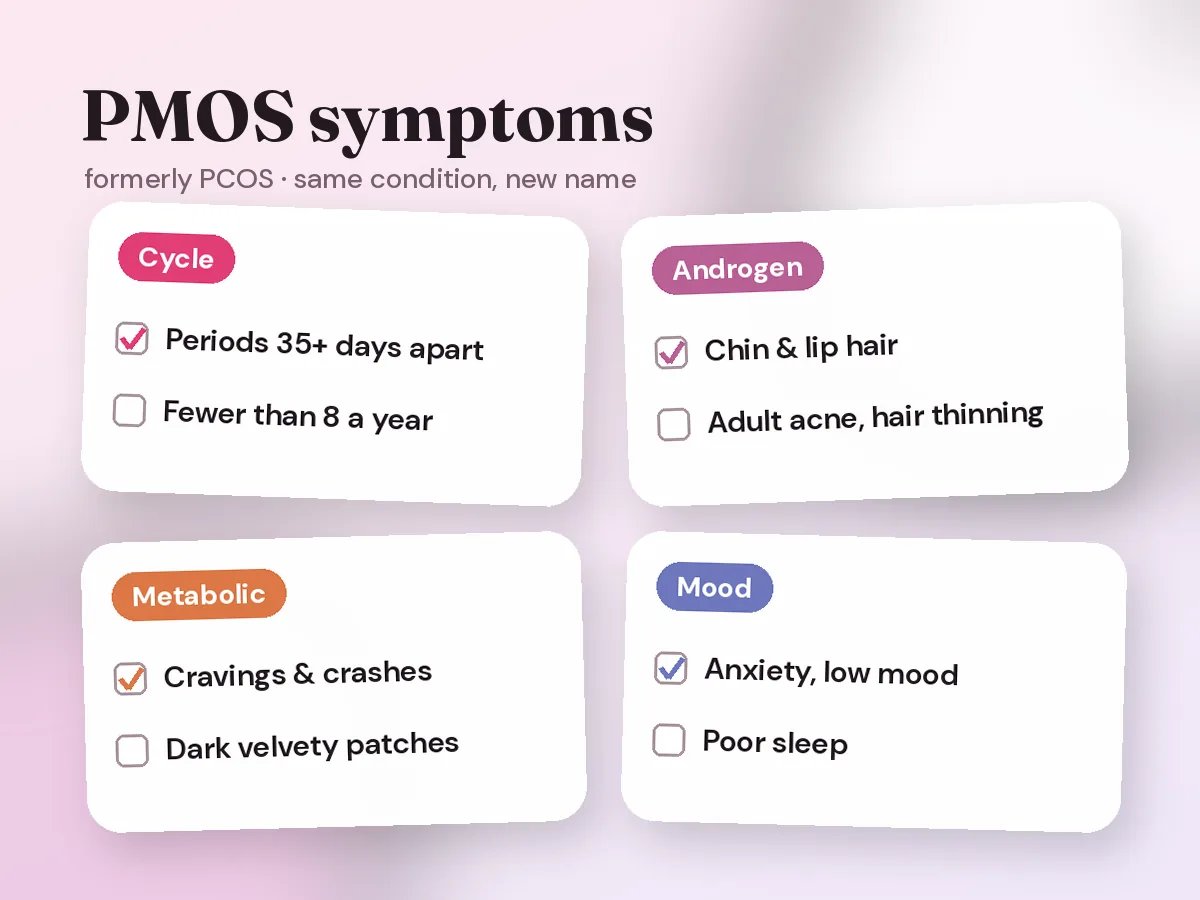
- Symptoms fall into four groups: cycle and ovulation, androgen-related skin and hair, metabolic, and mental health. You do not need all of them.
- Insulin resistance affects most people with PMOS, including many at a normal weight, which is why cravings, fatigue after meals, and dark skin patches belong on the list.
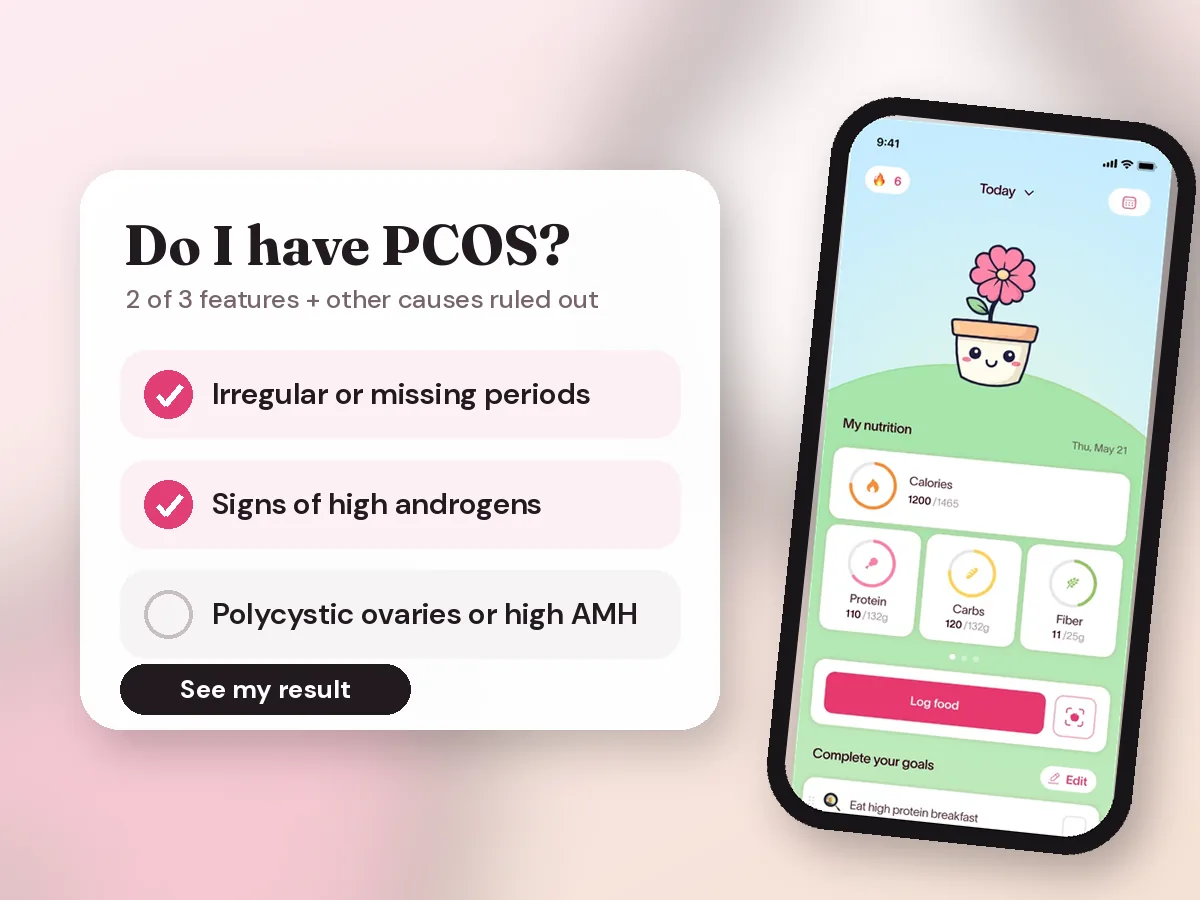
- Diagnosis has not changed: adults need 2 of 3 features (irregular ovulation, high androgens, polycystic ovaries or high AMH) once other causes are ruled out.
- Symptoms shift with age: acne and irregular cycles in the teens, fertility and weight in the 20s-30s, and heart and diabetes risk later.
PMOS symptoms are PCOS symptoms under the new name. In May 2026 a global consensus renamed polycystic ovary syndrome polyendocrine metabolic ovarian syndrome (PMOS), because the condition is driven by hormones and metabolism, not cysts. The main symptoms are irregular or missing periods, acne, excess facial or body hair, scalp hair thinning, weight gain around the middle, insulin-resistance signs like cravings and energy crashes, and higher rates of anxiety and depression. You do not need all of them, and many people have only two or three.
It affects about 1 in 8 women worldwide (The Lancet, 2026). Why the name changed is covered in PCOS is now PMOS; this page is the symptom checklist.
PMOS symptoms by body system
The Lancet consensus describes PMOS features as reproductive, metabolic, dermatological, and psychological. Here is what that looks like day to day.
1. Cycle and ovulation (the “ovarian” part)
- Periods more than 35 days apart, fewer than 8 a year, or none for months
- Very unpredictable cycles, or cycles under 21 days
- Heavy or prolonged bleeding after a long gap
- Ovulation tests that never clearly peak, or that look positive for days (how to track ovulation with PCOS)
- Trouble getting pregnant, which is often the reason people first get diagnosed
2. Androgen-related skin and hair (the “polyendocrine” part)
- Coarse dark hair on the chin, upper lip, jaw, neck, chest, or belly (hirsutism)
- Persistent adult acne, especially along the jaw, chin, and back
- Thinning hair at the crown or a widening part (PCOS hair loss)
- Oily skin
3. Metabolic (the “metabolic” part the old name hid)
- Weight gain around the waist, or finding weight very hard to lose
- Strong sugar or carb cravings and energy crashes an hour or two after meals
- Dark, velvety skin patches on the neck, armpits, or groin (acanthosis nigricans)
- Skin tags
- High fasting glucose, prediabetes, or type 2 diabetes
- High triglycerides, low HDL cholesterol, or high blood pressure
- Fatty liver (MASLD) and sleep apnea
The updated 2023 guideline summary notes that insulin resistance is present in about 85% of people with the condition, including many who are not overweight. That is why “lean PCOS” exists (lean PCOS) and why food and activity changes help symptoms even without weight loss. More on that in PCOS insulin resistance.
4. Mental health and well-being
- Anxiety and depression, which are more common with PMOS
- Disordered eating and a difficult relationship with food or body image
- Low self-esteem linked to hair, skin, or weight
- Poor sleep and daytime fatigue
The guideline recommends screening for these at diagnosis, not waiting for someone to bring them up. See PCOS and mental health.
Symptoms by life stage
| Life stage | What usually shows up | Notes |
|---|---|---|
| Teens | Acne, irregular cycles, early hair growth | Irregular cycles are normal for 1-3 years after the first period, so teens need both irregular cycles and high androgens to be diagnosed, and ultrasound is not used (PCOS in teens) |
| 20s-30s | Irregular periods, fertility problems, weight changes, hirsutism | Often diagnosed when trying to conceive or coming off the pill (post-pill PCOS) |
| Pregnancy | Higher risk of gestational diabetes and high blood pressure | Worth telling your obstetric team about the diagnosis |
| 40s and later | Cycles may become more regular; metabolic and heart risks matter more | Keep up glucose, cholesterol, and blood pressure checks |
Quick self-check
Count how many of these apply to you:
- My periods are usually more than 35 days apart, or I have fewer than 8 a year
- I have coarse dark hair on my chin, lip, chest, or belly
- I have persistent acne or scalp hair thinning as an adult
- I have strong cravings or crashes after meals, or dark velvety skin patches
- A parent or sibling has PCOS/PMOS or type 2 diabetes
If you ticked the first box plus one of the next two, it is worth asking about PMOS. For a guided version, take the free Do I have PCOS? quiz; it turns your answers into a checklist for your appointment. It is not a diagnosis.
How PMOS is diagnosed (unchanged)
Adults are diagnosed when 2 of these 3 are present, after other causes are ruled out:
- Irregular or absent ovulation
- High androgens, on bloodwork or as symptoms like hirsutism
- Polycystic ovaries on ultrasound, or a high AMH level
| Symptom you have | What a clinician may check |
|---|---|
| Irregular or missing periods | Pregnancy test, TSH, prolactin, FSH and LH; sometimes a progesterone test to confirm ovulation |
| Hair growth, acne, hair thinning | Total or free testosterone, SHBG, 17-OHP (to rule out non-classic CAH) |
| Cravings, weight around the middle, dark skin patches | Oral glucose tolerance test or HbA1c, fasting lipids, blood pressure |
| Snoring, waking unrefreshed | Sleep apnea screening |
| Low mood or anxiety | Mental health screening questions |
Full detail: how PCOS is diagnosed. The older symptom guide, PCOS symptoms, covers red flags that need sooner care.
What to do with your symptoms
- Write them down for 4-8 weeks before your appointment: bleed dates, 2-3 symptoms rated 0-3, and anything that seems to make them better or worse.
- Ask for the full workup, including glucose and cholesterol, not just hormones.
- Start with the levers that help most symptoms: protein and fiber at each meal, regular strength training and walking, and sleep. Our PCOS insulin resistance diet and workout plan are good starting points.
Track your PMOS symptoms in PCOS Polly
PCOS Polly (the name stays the same) tracks PMOS symptoms, irregular cycles, meals, supplements, and sleep in one timeline, so you can show your doctor a real pattern instead of a guess. It is free to try for 7 days.
Try PCOS Polly free for 7 days →
Sources
- PCOS name change consortium. Polyendocrine metabolic ovarian syndrome, the new name for polycystic ovary syndrome: a multistep global consensus process. The Lancet, May 2026.
- Monash University. International Evidence-based Guideline for PMOS/PCOS, terminology update, June 2026.
- Teede HJ et al. 2023 International Evidence-based Guideline for the Assessment and Management of PCOS.
- Cleveland Clinic Consult QD. What the renaming of PCOS means in practice.
- NHS. Polyendocrine metabolic ovarian syndrome (PMOS, previously PCOS).
Frequently asked questions
What is the full list of PMOS symptoms? +
PMOS symptoms include irregular, infrequent, or absent periods; trouble getting pregnant; acne; excess hair on the face, chest, or belly; thinning scalp hair; weight gain around the middle; sugar cravings and energy crashes linked to insulin resistance; dark velvety skin patches; poor sleep or sleep apnea; and higher rates of anxiety and depression. Most people have some of these, not all.
Are PMOS symptoms different from PCOS symptoms? +
No. PMOS is the new name for the same condition, adopted through a global consensus published in The Lancet in May 2026. The symptoms, diagnostic criteria, and treatments are unchanged. The name changed to reflect that the condition is hormonal and metabolic, not a disease of ovarian cysts.
Can you have PMOS without cysts? +
Yes. The ovarian 'cysts' seen on ultrasound are small follicles, not true cysts, and they are not required for diagnosis. Adults can be diagnosed with irregular ovulation plus high androgens alone. Avoiding the cyst confusion was one of the main reasons for the rename.
Can you have PMOS and regular periods? +
It is possible. Some people with PMOS have fairly regular cycles but high androgens and polycystic ovaries or a high AMH level, which meets the 2-of-3 rule. Regular bleeding does not always mean regular ovulation, so a progesterone test can help if you are unsure.
What tests check for PMOS? +
Clinicians usually check total or free testosterone and SHBG, and rule out thyroid disease (TSH), high prolactin, and non-classic congenital adrenal hyperplasia (17-OHP). An ultrasound or AMH test may be used in adults. Because of the metabolic link, guidelines also recommend screening glucose (often an oral glucose tolerance test or HbA1c), cholesterol, and blood pressure.
Keep reading
All articles →-
 Guide
Irregular Periods and PCOS: Causes, Treatment Options, and When to Worry
Irregular periods with PCOS: why cycles run long, what to do with no period for months, how to regulate your period, and when to get care.
Read article -
 Guide
PCOS in Teens: Symptoms by Age, Diagnosis & Parent Tips
PCOS symptoms in teenage girls by age, 11 to 19: which cycle and skin changes are normal, which are not, how teen diagnosis works, and parent tips.
Read article -
 Guide
Do I Have PCOS? Free 2-Minute PCOS Quiz & Self-Check
A free 10-question PCOS quiz based on the 2023 diagnostic criteria. See how your symptoms line up and get a doctor checklist of tests to ask for.
Read article